Key Takeaways
- Neuromuscular dentistry looks at how the teeth, jaw joints, and surrounding muscles work together rather than viewing the bite in isolation.
- It may help explain jaw pain, clicking, headaches, and other symptoms linked with jaw function.
- Evaluation can include muscle activity, jaw movement, bite relationships, and joint function.
- Treatment is planned around an individual’s comfortable and functional jaw position.
- Orthotics and other bite-correction options may be considered after a detailed assessment.
- A consultation is the best way to determine whether this approach fits your symptoms and goals.
What Is Neuromuscular Dentistry? (Definition & Core Concept)
If you have searched for “what is neuromuscular dentistry,” you have probably found that it is more than a discussion of crooked teeth. Neuromuscular dentistry is an approach to evaluating the relationship between the teeth, jaw muscles, and temporomandibular joints. Its central idea is that a comfortable bite should be considered alongside how the jaw moves and how the muscles function.
The approach aims to identify a jaw position in which the muscles can remain relaxed and the joints can function appropriately. Rather than assuming that the existing bite is automatically the best guide, the dentist studies the full chewing system before recommending correction. This broader view can be useful when symptoms do not seem to come from the teeth alone.
Neuromuscular dentistry is often discussed in connection with TMJ or TMD concerns, including jaw discomfort, muscle fatigue, headaches, and difficulty chewing. It does not mean that every symptom has a dental cause, and it cannot promise one treatment will suit everyone. A careful examination is needed to separate jaw-related problems from other possible sources of pain.
For readers who want a more technical overview, the National Institute of Dental and Craniofacial Research (NIDCR) offers a detailed clinical overview of temporomandibular disorders and how they relate to jaw, muscle, and joint function.
How Neuromuscular Dentistry Differs From Traditional TMJ Dentistry
Traditional TMJ care may concentrate on the joint, the teeth, or the symptoms that brought a patient to the office. Neuromuscular dentistry takes a more coordinated view, considering the joints, muscles, nerves, and bite as parts of one connected system. The distinction is less about choosing one label over another and more about how the examination is structured.
A conventional bite assessment often observes how the upper and lower teeth meet in the position a patient naturally uses. A neuromuscular assessment may also explore how the jaw behaves when the muscles are relaxed and how that position compares with the current bite. The goal is coordination, not simply moving teeth or adjusting surfaces without understanding the forces involved.
The approach can be especially relevant when a person has recurring symptoms, a history of worn or damaged teeth, or discomfort that has not been explained by a basic dental examination. It is still a clinical process, not a diagnosis based on symptoms alone. The findings should be discussed clearly, including what is known, what remains uncertain, and which options are reversible.
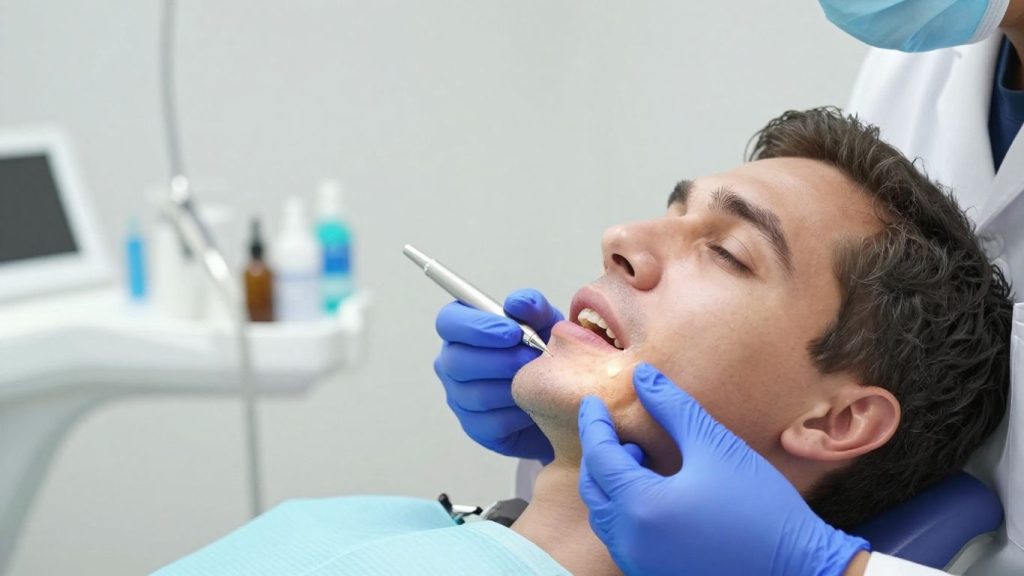
That distinction helps patients ask better questions. A useful consultation should explain what has been examined, why a particular treatment is being suggested, and how progress will be monitored rather than presenting bite correction as a universal answer.
How the Neuromuscular Bite Correction Process Works
Bite correction begins with information gathering, not with an irreversible procedure. The clinician looks at the way the jaw rests, moves, and closes, then considers the condition of the teeth and the function of the muscles and joints. The resulting plan depends on the examination and on the patient’s symptoms, oral health, and priorities.
Diagnostic Technology: TENS, EMG & Joint Sonography
Some neuromuscular evaluations use technology to add objective information to the clinical examination. TENS may be used to stimulate and relax the jaw muscles, while electromyography, or EMG, records muscle activity. Joint sonography can provide information about sounds or movement associated with the temporomandibular joints. These tools are interpreted alongside a physical examination, patient history, and bite analysis.
The role of each method is different, so no single reading should be treated as the complete diagnosis. A simple overview looks like this:
| Assessment Method | What It May Examine | Why It Can Be Useful |
|---|---|---|
| TENS | Muscle relaxation and jaw positioning | Helps explore a physiologic rest position |
| EMG | Activity in selected jaw muscles | Adds information about muscle patterns |
| Joint sonography | Joint sounds and movement | Supports evaluation of TMJ function |
| Clinical bite analysis | Tooth contact and jaw movement | Connects measurements with everyday function |
Together, these findings can help the dentist compare the existing bite with a more comfortable jaw position. The measurements are not a substitute for professional judgment, but they can make the discussion more concrete and help shape the next step.
Finding Your Optimal, Pain-Free Jaw Position
The phrase “optimal, pain-free jaw position” should be understood as an individualized treatment aim rather than a guaranteed result. The dentist works to identify a position where the muscles, joints, and teeth can function with less strain. That may involve temporary testing before any longer-term bite change is considered.
A temporary orthotic can sometimes help assess how a proposed jaw position feels during speaking, chewing, and ordinary daily activity. If symptoms improve or function becomes more comfortable, the clinician has additional information for planning. If the device is uncomfortable or the symptoms do not change, that response matters too.
Treatment decisions may include an orthotic, selective bite adjustment, orthodontic care, or restorative dentistry, depending on the findings. Any irreversible step should follow a clear explanation of alternatives, expected benefits, limitations, and maintenance needs. The right plan is usually the one that is clinically justified and manageable for the patient.
Signs You May Need Jaw Alignment or Bite Correction
Jaw problems do not always announce themselves as tooth pain. Some people notice clicking or fatigue, while others experience headaches, disrupted sleep, or tenderness around the face and neck. These signs can have many possible causes, so they are reasons to seek an evaluation rather than proof that bite correction is needed.
Jaw Pain, Clicking & Locking
Pain around the jaw, temples, or cheeks may become more noticeable while chewing, yawning, or clenching. Clicking and popping are common experiences, but a sound accompanied by pain, restricted movement, or a change in the way the teeth meet deserves attention. Locking, especially when the mouth cannot open or close normally, should be assessed promptly.
Keep track of the pattern rather than focusing on one isolated episode. A clinician may want to know whether symptoms are worse in the morning, whether they follow stressful periods, and whether chewing on one side feels easier. Other useful details include:
- Tenderness in the jaw muscles or around the temples
- Difficulty opening wide or moving the jaw smoothly
- A bite that feels different from one day to the next
- Tooth wear, sensitivity, or damage associated with clenching
This information gives the examination a practical context. It also helps distinguish a persistent functional concern from an occasional, painless joint sound that may not require treatment.
Headaches, Neck Pain & Sleep Disruption
Jaw-muscle tension can occur alongside headaches, facial tightness, neck discomfort, and poor sleep. Some people also report ear-related sensations or morning fatigue, although these symptoms are not specific to TMJ disorders. A thorough assessment should therefore consider general health, sleep habits, stress, medication, and other possible explanations.
A bite evaluation may be worthwhile when these symptoms occur together with clenching or grinding, jaw tenderness, or chewing difficulty. The aim is not to attribute every headache or neck ache to the bite. Instead, it is to determine whether jaw function appears to be contributing and whether dental care should be part of a broader plan.
What Happens During Your Neuromuscular Consultation in Camana Bay
A consultation is a conversation as much as it is an examination. You can expect questions about your symptoms, previous dental treatment, daily habits, and what you hope to change. The appointment should leave you with a clearer understanding of the findings and the choices available to you.

For people looking for a Camana Bay dentist, location is only one part of the decision. It is equally important to choose a practice where the evaluation and proposed treatment are explained in terms you can understand.
Initial Evaluation, Diagnostics & Treatment Planning
The initial visit may include a review of your medical and dental history, an examination of the teeth and gums, palpation of the jaw and facial muscles, and an assessment of opening and closing movements. The clinician may also evaluate tooth contacts, signs of wear, and the way the bite changes during movement. If additional diagnostic information is appropriate, it will be discussed before it is collected.
Bring a list of symptoms, medications, relevant scans or dental records, and any details about night-time grinding or previous appliances. Photos of swelling or episodes of locking can also be useful if the symptom is not present on the day. These small details often make the consultation more efficient and more personal.
The outcome may be a recommendation for further evaluation, a conservative first step, or a discussion of several possible treatment paths. There is no need to decide on extensive care before you understand the diagnosis and the reason for each proposed step.
Custom Orthotics & Ongoing Treatment
When an orthotic is recommended, it is designed to help position the jaw and test how that position affects comfort and function. It may be used for a period of observation, with follow-up visits to assess fit, symptoms, chewing, and changes in the bite. Adjustments are guided by the patient’s response and by clinical findings.
Ongoing care can involve monitoring alone or may lead to a broader plan. Depending on the situation, that plan could include dental restoration, orthodontic treatment, bite adjustment, or continued use of an appliance. The sequence matters, particularly when a proposed change could be difficult to reverse. Ask how often follow-up is expected, what sensations are normal after fitting, and which symptoms should prompt a call. Clear instructions make it easier to participate in treatment and to report meaningful changes accurately.
Why Choose Cayman Dental as Your TMJ Specialist in Grand Cayman
Choosing a TMJ specialist is about finding a team that will listen carefully and evaluate the whole picture. Patients should feel comfortable describing symptoms that may seem unrelated, asking about uncertainty, and requesting an explanation of every proposed procedure. A calm, evidence-aware conversation is a valuable part of care.
Patients we see in Camana Bay often first describe a tight jaw after a stressful week, morning headaches they had put down to poor sleep, or a bite that suddenly feels “off.” These are exactly the kinds of details that become meaningful once we look at how the jaw, muscles, and joints are working together.
Cayman Dental offers a full range of neuromuscular dentistry services alongside general and restorative care, which can help patients place jaw concerns within their wider dental care. For someone searching for a TMJ specialist Grand Cayman, continuity may be useful when bite, tooth wear, restorative needs, and jaw symptoms overlap.
A consultation at Cayman Dental can be the starting point for understanding whether neuromuscular evaluation is appropriate for you. The most suitable plan should reflect your examination, comfort, oral health, and goals — not a standard package or a promise of a particular outcome. Take time to discuss conservative options and the practical steps involved before proceeding.
Frequently Asked Questions
Questions about neuromuscular dentistry often involve both clinical details and practical planning. The answers below offer general guidance, but a personal examination is needed to determine what applies to your situation. Treatment recommendations and fees can vary substantially between patients.
Is Neuromuscular Dentistry Covered by Insurance in Cayman?
Coverage depends on your specific insurance policy, the diagnosis, and the procedure being recommended. Some plans may distinguish between an examination, an appliance, restorative work, and treatment considered elective. Contact your insurer before treatment and ask the dental office which documents or estimates may be available.
How Long Does Bite Correction Treatment Take?
Treatment time depends on the cause of the symptoms, the type of correction, and how your jaw responds. An initial evaluation may be completed in one visit, while orthotic testing and any later restorative or orthodontic care can take longer. Your dentist should outline the expected stages and review progress as treatment continues.
Are Neuromuscular Dental Treatments Reversible?
Some steps, such as observation or a removable orthotic, are generally more reversible than tooth reshaping or restorative procedures. Ask about reversibility and alternatives before agreeing to treatment.
When Should Jaw Symptoms Be Assessed Urgently?
Seek prompt professional advice if the jaw becomes locked, opening is suddenly restricted, swelling develops, or pain is severe or rapidly worsening. Difficulty breathing or swallowing requires urgent medical attention.
Schedule Your Neuromuscular Dentistry Consultation in Cayman Islands
Neuromuscular dentistry considers the relationship between teeth, muscles, and jaw joints when evaluating bite and TMJ concerns. For Cayman Islands patients, a thoughtful consultation can clarify whether symptoms may be connected to jaw function and which treatment options are reasonable.
If jaw pain, clicking, headaches, or an unsettled bite is affecting daily life, a consultation can help clarify what is happening. Write down when symptoms occur, what makes them better or worse, and whether you have noticed clenching, grinding, or changes in chewing. That preparation gives the dentist a useful starting point.
A bite correction dentist Cayman patients can access should explain the findings without rushing you toward a decision. Ask which parts of the plan are reversible, how improvement will be measured, and what alternatives are available. Good care includes realistic expectations as well as technical skill.
To arrange an evaluation, ask about a neuromuscular dentistry consultation with the Cayman Dental team. A conversation with the team can help you decide whether jaw alignment assessment is the appropriate next step for your symptoms.